Tuesday, January 19, 2010

5 Important Time Management Strategies for Employees

If we were able to put a tiny, automated on/off switch inside every employee's head, and run checks on how many hours of the day they are focusing on work for, the results would probably astonish both employers and employees! Even if Facebook is blocked from work computers, there are high levels of supervision and employees must leave their phones somewhere away from their workstation, there is plenty of unproductive time at work … and most businesses don't have anything close to this strictly controlled atmosphere. Nor would they want to! Today we are looking at simple, proactive solutions to the productivity dilemma (including telephone time clocking), plugging some obvious holes so that brain breaks are no longer company-killers.
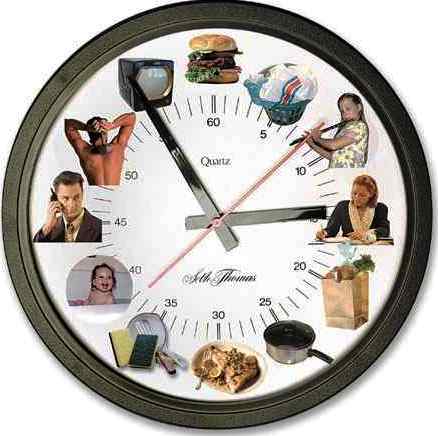
Activity logs
These are as close as we can get to having that magical automated on/off switch inside the brain. Logging the amount of time spent on each activity, not just for the entire day at work, helps identify slow spots and difficulties. When we have to write down how much time was spent on something, we are much more accountable for it. Manual systems can work well, but automated systems, like a micro-version of telephone time clocking, are the ideal solution.
Telephone Time Clocking
According to rounding rules at both federal and state levels, rounding might be permitting your employees to be paid for up to fifteen minutes a day when they aren’t even on the work premises. Implement systems like telephone time clocking to plug this obvious productivity hole.
Prioritization
Effective managers use this tool all the time -- get the most important thing done first. If your employees don't have all the information necessary to decide what tasks on their list are the most important, managers should be helping them decide. This can be done at weekly, daily or monthly meetings.
Interruptions can be even more devastating to a company budget than manual time cards and their daily fifteen minute inaccuracies. We havetelephone time clocking as a set process to manage the signing in dilemma -- but no set rule for dealing with interruptions. It simply has to become a part of company culture that employees interrupt each other as little as possible. Questions can be left at a central spot rather than asked as they come up, for example.

Sunday, January 10, 2010

United States Timecard Laws

In a highly developed society, you'll find that legislation and regulation in many areas is increased. Business is an area of society that is hard hit with regulation, and people can study business law for years and still not have a comprehensive understanding … and that is only the legal system for one country! You may not realize the extent of laws that relate to timecard provisioning and use in the United States. Today we are looking at the laws themselves, and how telephone time clocking can help employers comply with their obligations with a minimum of fuss, effort and financial investment.
Federal versus state laws
We are looking at federal laws with regard to timekeeping for employees today; however, many states have laws that are stricter than those imposed at the federal level. You must always go by the stricter principle, so check with a local employment law expert to ensure that you are complying the relevant standard.
Types of timekeeping
Almost any type of timekeeping is permitted under federal law, as long as it is an ACCURATE representation of the time worked by a particular employee. So, even the most low-tech methods, like pen and paper are allowed. Of course, you will have process and operational considerations when you choose a method of timekeeping -- low-tech isn’t necessarily best. Telephone time clocking is one of the most accurate, indisputable methods available. Methods may include:
  • Pen and paper
  • Timecard punch machine
  • Electronic badge readers
  • Scanners
  • Telephone time clocking
Who are the laws directed at?
Employees that are entitled to overtime pay are the target of most timekeeping laws in the U.S. However, employees that are exempt from being owed overtime still need to keep accurate time records for sick pay and leave purposes.
Who is responsible for the accuracy of the records?
Given the fact that low-tech methods of timekeeping are perfectly lawful and it isn't reasonable to ask a manager to record every employee coming and going, it is the employee's responsibility to make sure timecards are accurate. Unfortunately, there are too many ways in which they can be inaccurate by just a little bit … costing corporations a lot of money!
Rounding
According to federal law rounding on time cards is allowed, as long as it doesn’t unduly benefit the employer and it balances out over time. The problem with this policy is that there is no way to know (without extensive monitoring) in a manual timecard system whether it actually does balance out. Telephone time clocks overcome this difficulty for employers.


Tuesday, December 15, 2009

The Technology Behind Phone Time Clocks

It's a wonderful thing when technology works in your favor, isn't it? One way managers can have that experience is with a phone time clock. Thanks to an old-school standard, the telephone, and modern-day Internet capability, telephone time clock systems are extremely simple and effective. Just in case you're wondering if phone-based time attendance tracking would work for your company, here's a quick review of the technology behind these innovative systems.

Telephone time clocks require, as we mentioned, only a telephone and access to the Internet. Here's where the telephone portion comes in:

* Employees at remote locations or seasonal employees call a toll-free number to start their shifts.
* They key in their employee and location codes to register their attendance.
* When their shift ends, they again call in and key in the same information and the hours worked are automatically calculated.

But how does the Internet come into play?

* Individual accounts are set up for every company implementing this type of time attendance tracking.
* The server which houses the phone time clock software also stores each employee's hours.
* Managers and payroll department staff for each company can log in twenty four hours a day, from any Internet-compatible computer, to check real-time employee attendance.
* Via the Internet, it's also possible to log in, print time cards and review historical data for all employees.
* In a top-quality phone time clock system, the central server synchronizes itself daily to ensure complete accuracy.

So, what does all that well-blended technology really mean for frustrated managers? For one thing, being web-based means being able to manage remote locations from a central office (or even from home!) It means not having to call in and verify with shift managers that a full crew has reported for duty.

It means saving your payroll department hours of time chasing time cards, recalculating inaccurate time records and waiting for manager signatures. It can also mean a gold star in some manager's file if she's the wise person who suggested this time-saving, budget-conscious innovation.

Thanks to the amazing flexibility of the Internet and almost universal access to telephones, phone time clocks work, period. Very large companies and small, single owner firms have benefited from the technology that makes this all possible. Do your homework and find the righttelephone time clock system for your firm. Technology just made your life a whole lot simpler.

Thursday, December 10, 2009

A Day in the Life of a Payroll Manager

Tick, tick, tick...your time clock is counting down the time to your next payroll, and you're missing timecards AGAIN. Why didn't you listen when you heard about that new telephone time clock system last month? If you had, your life as a payroll manager could be so much different right now.

For one thing, you wouldn't be grinding your teeth chasing timecards, because your offsite employees would be calling in to a phone time clock system instead of punching in. They'd simply call in to a secure line (that lets you check where they're calling from) and record exactly when they arrived at work.

Imagine how much less-stressed you'd be right now, if only that phone-based time attendance tracking system was in place. No more calling employees and managers at remote locations, begging them to deliver the timecards that are holding up payroll.

No more driving around from store to store, hoping all the timecards you need are up-to-date and signed by a manager. And here's a really big difference -- you'd no longer be held captive by timecards that need corrections!

How, exactly, would a day in the life of a payroll manager look in a telephone time clock world? Imagine logging in to a secure website and seeing displayed, with a few clicks of the mouse, real-time payroll data for the current time period.

Picture printing every employee's time card, no matter where they work, on your own desktop printer. Allow yourself to feel how wonderful it would be to never have to track down a manager again in order to verify a timecard.

Right now, you may be saying, "Nothing is that simple. They just don't understand how difficult payroll processing is!" You're correct, in the old-school, mechanical time clock world, payroll processing can be a real pain. Chasing timecards, requiring manager signatures, manually calculating time worked and, finally, beginning to feed each employee's time into some sort of payroll system. With all that hassle, it's a wonder any company is able to hire someone to process payroll!

But that's definitely a thing of the past. Your life as a payroll manager can be transformed by the implementation of a phone time clock system. With a little initial training, every employee will learn to love not having to keep track of their timecard. Every manager will appreciate not having to calculate, verify and sign those timecards, too.

And you, my friend, will be free to actually manage the payroll process instead of chasing timecards. Your payroll clerks will no longer have to cower outside your door, afraid to tell you that payroll's going to be late, again. A click here, a report there, and this week's payroll's on its way to being finished. Now, isn't that a nicer sort of life to contemplate?

Wednesday, November 18, 2009

Using a Telephone Time Clock

With many businesses trying to cut costs with the struggling economy, business owners are looking for new and innovative ways to improve the bottom line. There now has been an increased interest in money saving ideas and tips. With this being said, many business owners have switched to using a Telephone Time Clock.

A telephone time clock can help business owners to keep an accurate record of the amount that an employee away from the office has worked. This system can help business owners from overpaying employees, reducing the payroll costs. It also gives the employees an accurate record of the hours they have worked during a pay period.

Sometimes with traditional time clocks, employees can pad their time card, costing the business owner thousands over a period of time. Using this type of system for Time Attendance Tracking can drastically reduce if not eliminate these types of problems. This means more money saved by the business owner every month.

Many companies are trying to become more environmentally aware and are looking for greener ways to run their businesses. By using a telephone time clock there are no traditional time clock machines to purchase or paper time cards. This saves money in having to purchase these items and keeps using paper products down in the office. This has made using a telephone time clock better for the environment.

A Phone Time Clock is also easy for employees to use. It is very simple to operate -- if an employee can use a telephone, then they can use a telephone time clock. All an employee has to do is dial a toll-free number in order to clock in or out. This makes it easier for employees that work from home or have to travel for work.

The employer and the employee are able to view the time worked 24 hours a day. All that is required to do this is having access to the internet. This helps both the employee and the employer to keep track of the time worked during the pay period and keeps time worked disputes down to a minimum.

Companies that have started using a Phone Time Clock find that the system works very well. Business owners have seen a reduction in overpaying employees. The system is easy to operate and employees can keep track of their own hours. It is also a green product that helps the environment. A telephone time clock has helped many businesses to run more efficient and has helped companies save money.


Sunday, November 8, 2009

Keeping Track of Employee Hours

Five years ago my husband and I decided to open up our own catering service. We could not afford to hire any employees at first. It took us almost two years to establish our catering company and build up our client base. Finally after working many hours and with a lot of hard work, our business grew rapidly. We knew then that it was time that we hired some employees to help with the many weddings and parties that were booked.

My husband soon hired ten employees to help us keep up with the demand. We thought this was great, until trying to keep track of the hours each person had worked each week. This became a huge hassle with all the employees not working in the kitchen at the same time and traveling to each job site. We ended up over paying many of them and that cut into our profits. We were in search of a better way to keep track of our employees' hours.

A friend of ours who owned a huge florist shop in the area told us how he kept track of his workers hours every week when they were setting up flowers for weddings and parties. He said the solution was simple. What we needed was a Telephone Time Clock. That was how he kept labor costs down and had an accurate account of the hours each employee had worked each week.

My husband and I decided that this was the system that we needed to implement in order to keep an accurate record of each workers hours. We quickly put the Phone Time Clock into use the following week.

Our employees had no problem with the new clocking-in procedure. In fact, our hard working employees loved the new way that they could clock in and out. It made it so much easier on everyone and our receptionist was thrilled about how it had simplified her job at our catering company.

Our Time Attendance Tracking is so accurate now that we are now seeing an increase in our profits due to not overpaying our employees. This has made us both very happy and has helped us to focus more on our catering business. Our employees are happier too with the new time clock procedure.

Since using this system, it has saved us time and money. We like the new system so much that we have recommended it too many of our friends that are in the party planning business. They love the system as much as we do.

Wednesday, October 21, 2009

Reduce Remote Employee Babysitting with a Phone Time Clock

What could be more aggravating for a manager than the following scenario? You're safely home and ready to sleep when a night shift manager at a remote location calls in to say she's ill. Since her crew is relatively new, you check in with that office only to find that no one is answering the phone. Panicked, you climb out of bed and drive across town to find everyone working peacefully!

How could this scenario have been improved? Three words:
Telephone time clock. Had your company already had in place a phone time clock system, the scenario would have been much different.

For instance, not every manager remembers to call in immediately when she's ill. Not to worry; a telephone-based
time attendance tracking system can alert you by email when someone fails to report. Even if the manager hadn't called, you would have been aware of the situation.

The second way things would have been different with a
phone time clock is that, rather than calling frantically to learn if employees were on the job, you could have learned their status online.

Telephone
time attendance tracking systems are linked to an online interface for management. Once you learned of the manager's absence, a simple glance at the location's logins by phone would have told you that everyone was in place.

These terrific timekeeping systems, can't, of course, deal with the issue of employees who don't answer the phone! But in this case, you could have made a different decision about whether to race across town in the middle of the night.

This is all possible because each employee calls in to a central number and their time in and out is logged immediately in a web-based database. As a manager, you have employee time information from every office at your fingertips. Dealing with employee shortages is made so much easier when you learn, real-time, who's absent.

What a sane, orderly way to do business! If your company has remote locations and you're struggling to know if they're always fully-staffed, a telephone time clock can definitely restore your sanity.